The restaurant’s owner will look at the sales, and then the bottom line before closing the report.
Does this sound familiar?
It may be an extremely complete report, however by only examining those two figures, you leave the bulk of its worth in the dust.
It shouldn’t cause them to become more dependent on an accounting firm. It should help them feel confident in their own financials. It doesn’t require an expert in accounting or spend your entire night completing invoices. It’s crucial to understand what caused the change in profit as well as what happened to the labor and food items and what questions require consideration next week.
That’s the idea Bookkeeping Chef’s mission: to Automate the bookkeeping process that doesn’t need an owner’s time, while providing restaurant owners with clearer financial information they can actually use.
Begin with the Weekly Numbers Start with the Weekly Numbers, Not just Month-End
Restaurants do not operate on a monthly basis. Managers plan their labor for this week. The chef has ordered food for today. Vendors change prices now.
The Bookkeeping Chef’s weekly reports on prime costs are included with the monthly financial statements.
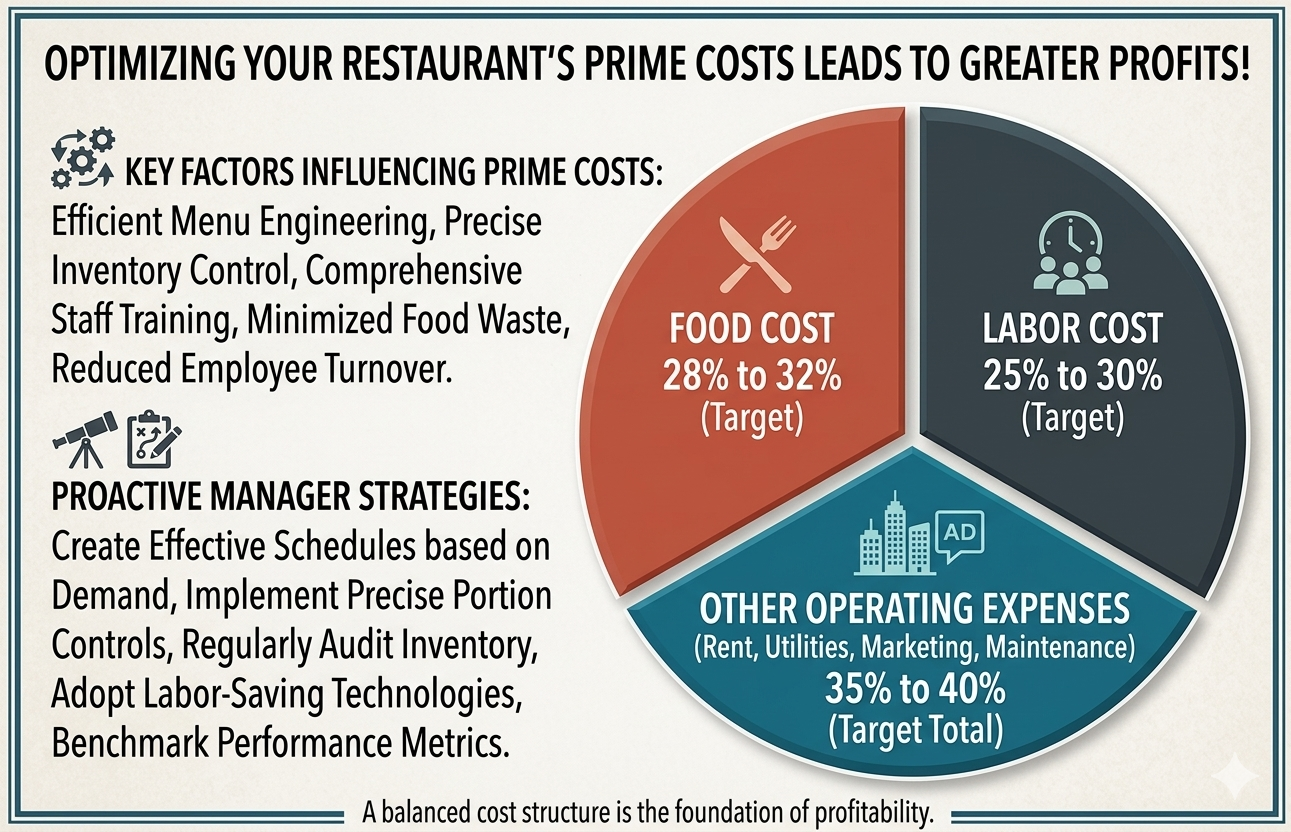
The prime cost combines the labor and goods costs, two areas in which the restaurant could make rapid progress. According to information published by the Bookkeeping Chef prime costs make up around 60% of restaurant sales.
Think about a situation where sales are not changing at all, but prime costs are increasing. The percentage alone does not offer the answer. It provides the owner with a reason to conduct an investigation.
Was there an increase in the amount of time worked? Did overtime occur? The cost of food changed? The invoice of a vendor was unusually high. Did the mix of sales changed?
It’s far more beneficial than finding the same problem several weeks later.
Automate the repetitive work
Self-bookkeeping doesn’t mean manually moving POS numbers into spreadsheets.
Automating restaurant bookkeeping can help with the frequent movement of financial information. The service is able to connect systems like POS as well as QuickBooks, payroll vendor platforms inventory management and recipe management as well payment and AP tools.
Automating for the sake automation is not the goal.
It is to reduce manual data entry, and keep accounting records up to date so that the owner can spend time looking over data instead of creating it.
It creates a completely different bookkeeping process for restaurants. Technology manages the mechanics while the proprietor is involved in the financial side.
Learn to ask the P&L Better Questions
A P&L becomes much less intimidating when you stop treating it as an accounting exam.
Start with the sales. Then look at the costs needed to make the sales. Compare the food and beverage performances. Analyze the costs of labor. Examine labor.
Compare periods.
Something between these two lines has changed in the event that sales have increased but the profits haven’t. If the cost of food increased, ask what happened operationally. Compare the staffing levels and sales activities if labor percentages changed. Find out if a figure seems odd, rather than assuming that the restaurant went through poor performance.
Bookkeeping Chef gives monthly P&Ls that are finalized within five business days. Business owners can look over the performance of their business without waiting months to receive financial statements.
For owners searching bookkeeping restaurant solutions, speed is useful but understanding is the bigger objective.
It’s not necessary to build everything.
There’s a middle way between delegating the entire financial responsibility to another and establishing yourself as your own bookkeeper full-time.
You could be a part of an owner of a business without having to perform all accounting tasks manually.
It could be as simple as using automated system connections to keep the information flowing. Or it could be as complex and involved a study of the monthly P&L or a look at the weekly Prime Cost Report.
Specialized restaurant bookkeeping can help with this method by making sure the books are in order as well as helping the owner know what they are.
The result is not an owner who can complete every bookkeeping task.
Owners who are able to take a seat and converse intelligently about their business with the P&L will have more success.
The objective of financial freedom is not to generate additional reports, but to attain financial freedom
Restaurants are a major source of data. A dashboard may not always make sense.
The real value comes when an operator looks at a weekly prime-cost report and recognize that something changed, then open the P&L and determine where to investigate further.
Bookkeeping Chef’s approach integrates automated bookkeeping for restaurants weekly reporting, monthly P&Ls, and specific financial assistance for restaurants to enable this.
Automate the repetitive work. Check your top costs each week. Learn to speak the same language as your P&L.
You don’t have to be an accountant professional.
You can be a successful owner who knows the financial story behind your restaurant.